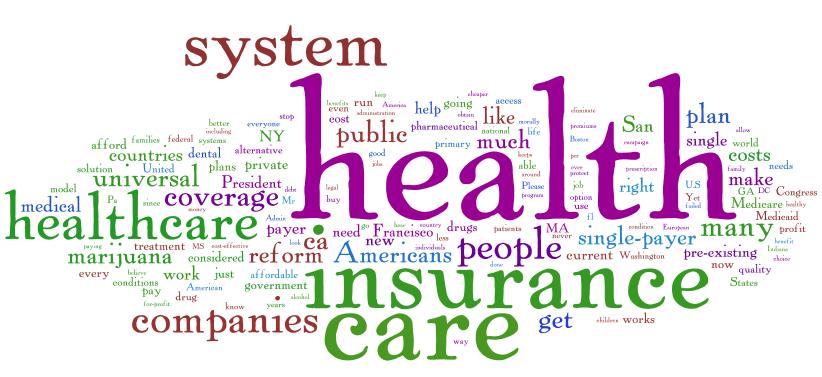
1. Health Care: This one is the most important to me and my family, and I could not be MORE thrilled with the recent ruling by the Supreme Court to uphold the new Health Care law. This means so much for my family (and I'm sure many many other families out there across the country). And as the wife of someone who's workplace chooses not to provide health insurance, I am excited for this change. As the mother of a child who's very existence, from the first tiny breath he took in this world, is one big ball of pre-existing conditions, I am very excited for this! And as mother of this same little boy, who was on track to hit his lifetime insurance cap before he hit Elementary School, I breathed a HUGE sigh of relief for him that day.
2. Gay Rights: Millions and Millions of dollars are being spent on both sides of this: preventing and in hopes of allowing 2 people who love each other to get married. I honestly don't understand how anyone has a right to decide if this should be legal. This is one area I have to just agree to disagree. I believe in marriage being between a man and a woman, I believe and love the Proclamation on the Family. However I honestly do not think it is any of our business what 2 people choose to do. It is between them and their Heavenly Father. We did fight for the right to come to this life to make out own choices, correct? So how is preventing people from making the choice to marry the person they love not prohibiting free agency? This is something that is not just going to go away, and is a lot of contention in many political and religious aspects.

3. Abortion: This is another huge debate topic in this country and I cannot fathom how anyone can think that aborting a child is not murder? It is something that I have always been against, but especially having had a child who was born just a couple of weeks after the limit for late term abortion and seeing how perfectly formed he already was, how capable he was of surviving and I wonder how can anyone see that as not being a human life. It has got to be one of the most selfish and horrific things that I have seen grow and grow in occurrence in this country, and with gender selective abortion becoming more popular in the US I really am afraid to see what comes next.

4. Unemployment: Ahh, what a time it is to be graduating college and entering such a wonderful job market [enter sarcasm here]. It's hard out there, and while I do hope and hope that it will get better soon, it's hard to see the light at the end of that tunnel. It's something that I've seen several family members struggle with, as they are graduating with Masters degrees and looking at zero prospects out there for them.

5. Immigration: Not sure how this one is going to get better, but there has to be some better way to handle this. Either make the process more streamlined, and easier (well I hate to say easier, but maybe more attainable) or just continue to accept the fact that the illegal immigrant population is going to continue to grow and grow. I am all for people coming to this country, I love the diversity that our country has. however there is a legal and correct way to do it, and by making that so unattainable it is just further continuing the illegal problem.


On gay rights:
ReplyDeleteHonestly, I ultimately believe this issue to be a distraction from more important things.
I find it interesting that few people actually discuss the fundamental issues here:
- Should there be a distinction between same-sex attraction and homosexual behavior?
- What, really, is a civil 'right'? Should it be based on behavior or based on how you are born into this world?
- Why does the state have a hand in marriage anyways?
- What is the definition of marriage?
About that last question: if marriage is just a state-sanctioned contract for any two people to have a physical relationship, then I obviously don't practice marriage. If, however, marriage is more than just a physical relationship, but a structural unit designed for the raising of stable children that benefit society, then I do try to practice it.
If society thinks marriage is the first of these definitions (which I believe it does), then I think we need a new word for the latter because they are inherently different.
I do agree on a few of those. But when it comes to the civil 'right' it depends on how you look at the issue, a lot of homosexual people believe they were born into this world, understandably so and therefore it does apply to them. I also have no idea why the state has a hand in marriage. As for the definition of marriage I agree with the latter as well, as that is how we are also trying to raise our family. And as are many homosexual couples who are able to adopt and raise perfectly stable children that go on to benefit society, and raise families of their own. I love the points you made, and I wholeheartedly agree with the later part of your look on marriage. I just have a hard time forcing my beliefs (because ultimately that is what it is, not everyone has the same outlook on what marriage is, a lot of it is religious or cultural beliefs) to tell someone else they can't get married because it doesn't fit my idea of how to create a family. I don't feel that is my place, or really anyone else on this Earth's place. But, that's just my personal belief.
ReplyDeleteSo after talking it over some more with my wife, I've come to the conclusion that it is good that the state has a hand in marriage for accountability purposes (and I have personal experience that I blindly overlooked.) If the state doesn't have a hand in it, then what happens when something goes awfully wrong like with children in divorce?
DeleteContinuing the issue of same-sex marriage:
I'm afraid that this issue has nothing to do with forcing religious beliefs on others, rather it is about true benefit to society and how society should react when there is a benefit or detriment. This goes for everything in a civilized society - we force our beliefs on each other every time we make a law or custom that does anything.
Now the real question is whether or not a union between a man and a woman has some real benefit to society over a same-sex union. If there is a benefit to this, then they should be in some category that receives benefits back from society to encourage such behavior. Greater expectations and commitments from this union are naturally required from society as a result. So, is there a benefit?
But let's say there is no difference between these two types of unions (and therefore no reason to benefit one over the other). What would this mean? (This is going to be incredibly difficult to not take a religious standpoint, but I will try...)
First, it would mean that there is nothing special about being a man or a woman. We will have an androgynous populace. If society is androgynous, how does that effect gender-specific issues like childbirth or maternity leave?
Second, it would mean that there is nothing special about children in either union. We don't have nearly enough data (and especially sufficient sample size) to know if children raised by same-sex unions are "perfectly stable". I've read several reports on these children and most are about the children before they have reached adulthood and started families of their own, while others are anecdotal. Most reports that offer numbers end up correlating good parenting of same-sex unions with income, social status, and number of extra-curricular school activities.
Now let's say technology progressed to the point of being able to somehow produce a viable zygote from two people in a same-sex union (hey, it could happen...) Would said children have a good understanding of the adult human race with only having an understanding of one sex growing up? This is the same issue with single parent families and even heterosexual families where one parent is never around. Unfortunately, this situation is built on the premise that there is some difference between men and women - which there may not be if my first argument is rejected.
Ultimately what needs to be considered is this: if all things are equal, are same-sex unions any different than heterosexual unions? If we applied the Mormon eternal perspective, I could answer this without sweat; but, our country doesn't have this.
Please don't take this the wrong way. I'm only interested in good, honest discussion which you've put forth, and I want to learn from it. Also, I need to work with you for the rest of the semester and would like to stay on good terms. :-)
Side note: I never wish to reduce the value of any committed heterosexual marriage that cannot have children for whatever reason. The sacrifice required for such a relationship, and the knowledge and experience that is gained from the other sex, also adds significant stability to society. Neither do I wish to reduce the value of hard-working, loving, single parents that are committed to their children.
I agree that all of these are big problems in america today. Especially unemployment. It's ridiculous that people that go to college that have masters degrees can't find a job. I just hope that for my generation, the job market picks up instead of the steady negative curve of unemployment.
ReplyDelete